
Peugeot 408 beyond the striking design: which powertrain makes more sense?
We revisit Tech2u's Peugeot 408 video test: design, cabin space, i-Cockpit, luggage capacity and the difference between the 130 hp petrol and 225 hp hybrid.
- Peugeot 408
- car review
- hybrid
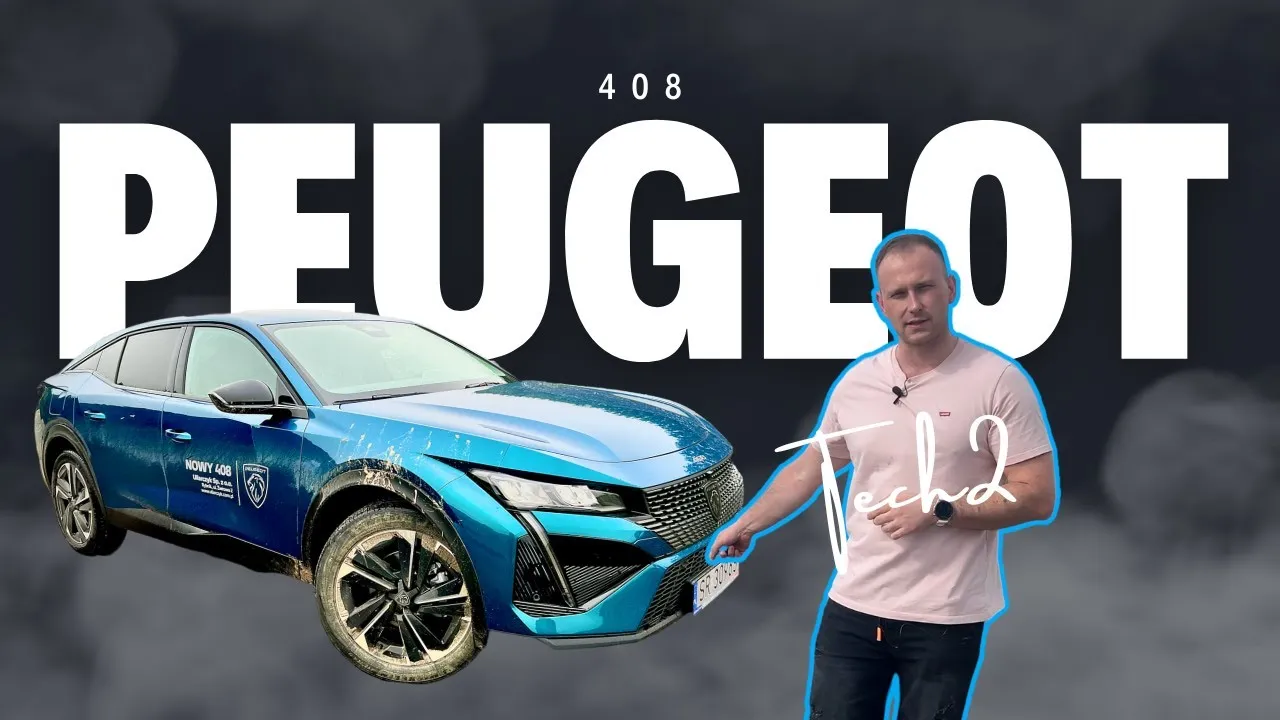
The concrete detail comes first, the conclusion second. Below we show the reasoning, its limits and what this story can genuinely add to your own work.
This article expands Tech2uPL’s 16-minute Peugeot 408 video review. It uses observations and figures stated in that test and does not invent measurements we did not make.
The Peugeot 408 achieves something a specification sheet cannot capture: it makes people stop and look. Our test car was shown in ordinary use rather than polished for a studio reveal, yet its proportions and details still carried the design.
A shape that promises more than the base engine
The central tension lies between the dramatic body and the 130 hp 1.2-litre petrol powertrain. In the video we noted hesitation from the transmission and a delay after a stronger accelerator input. It drives normally, but it does not deliver the emotional promise made by the exterior.
The 225 hp hybrid felt more coherent. Its electric assistance filled the response gap at low speed, and the heavier car felt better matched to the 408’s intended character.
Consumption observations, not laboratory results
The petrol car indicated roughly 9.2–10 l/100 km during normal dynamic use and about 6.4 l/100 km during deliberately gentle Eco driving. The hybrid was reported at roughly 5–8 l/100 km depending on pace.
These figures came from a specific period of use, not an identical controlled route. They support a limited conclusion: in this test, the smaller petrol engine did not automatically mean low consumption, while the hybrid combined better response with an acceptable result.
A practical cabin with one digital obsession
The compact steering wheel felt good in hand, although its finish was harder than expected. The centre console offered genuinely useful storage, sensibly positioned cupholders, dedicated phone space and wireless charging.
The displays remained readable in sunlight and the configurable instruments and shortcut strip were strong features. Climate control was less convincing. Removing physical dials creates a cleaner dashboard but demands more attention while driving.
Rear space and luggage
Rear legroom was generous and four people could travel comfortably. The sloping roof reduced headroom; in our presentation the remaining clearance was roughly one and a half fingers when sitting upright. A fifth passenger made the cabin noticeably less comfortable.
The video quoted 536 litres of luggage space and about 1,600 litres with the rear seats folded. The capacity is useful, although the high loading sill is likely to collect scratches. The rear window has no wiper. A good reversing camera helps with manoeuvring, but it cannot clear morning condensation.
Tech2u verdict
The 408 still looks fresh and its cabin contains more practical thinking than the dramatic body initially suggests. Yet the powertrain changes the car substantially. The 130 hp petrol is sensible transport dressed as something more emotional; the 225 hp hybrid better connects the design, response and road manners.
Our 8.2/10 score considers the 408 through both tested versions. A score for the 130 hp petrol alone would be lower. The practical recommendation is simple: test-drive the exact powertrain you intend to buy, not merely whichever demonstrator is closest to the showroom door.
Tech2u verdict
The 408 succeeds through design, space and a polished interface, but the base petrol powertrain does not fulfil the promise made by its sporty shape. In Tech2u's test, the 225 hp hybrid felt like the more complete version.
A Tech2u editorial score reconstructed from our own video test of two powertrains. It is not a current long-term or laboratory test.
+ Pros
- Distinctive styling that avoids looking like another conventional SUV
- Generous legroom, practical storage and useful luggage capacity
- Clear displays, personalisation and a useful configurable shortcut strip
- The 225 hp hybrid responds faster and suits the car's character
− Cons
- The 1.2-litre 130 hp petrol can hesitate and lacks the promised sporting feel
- Touchscreen climate controls require more attention than physical dials
- The falling roofline reduces rear headroom
- No rear wiper and a high boot sill can become daily irritations
 Reviews
Mission Describer review: make AI understand before it starts building
An in-depth Mission Describer review: how it turns a chaotic idea into a testable brief, where it helps, where it stops and why a human still approves the direction.
Read the story Reviews
Free blog hosting: what Cloudflare Pages actually gives you
A practical look at Cloudflare Pages for a static blog: speed, limits, images, CMS options, domains and the important trade-offs.
Read the story